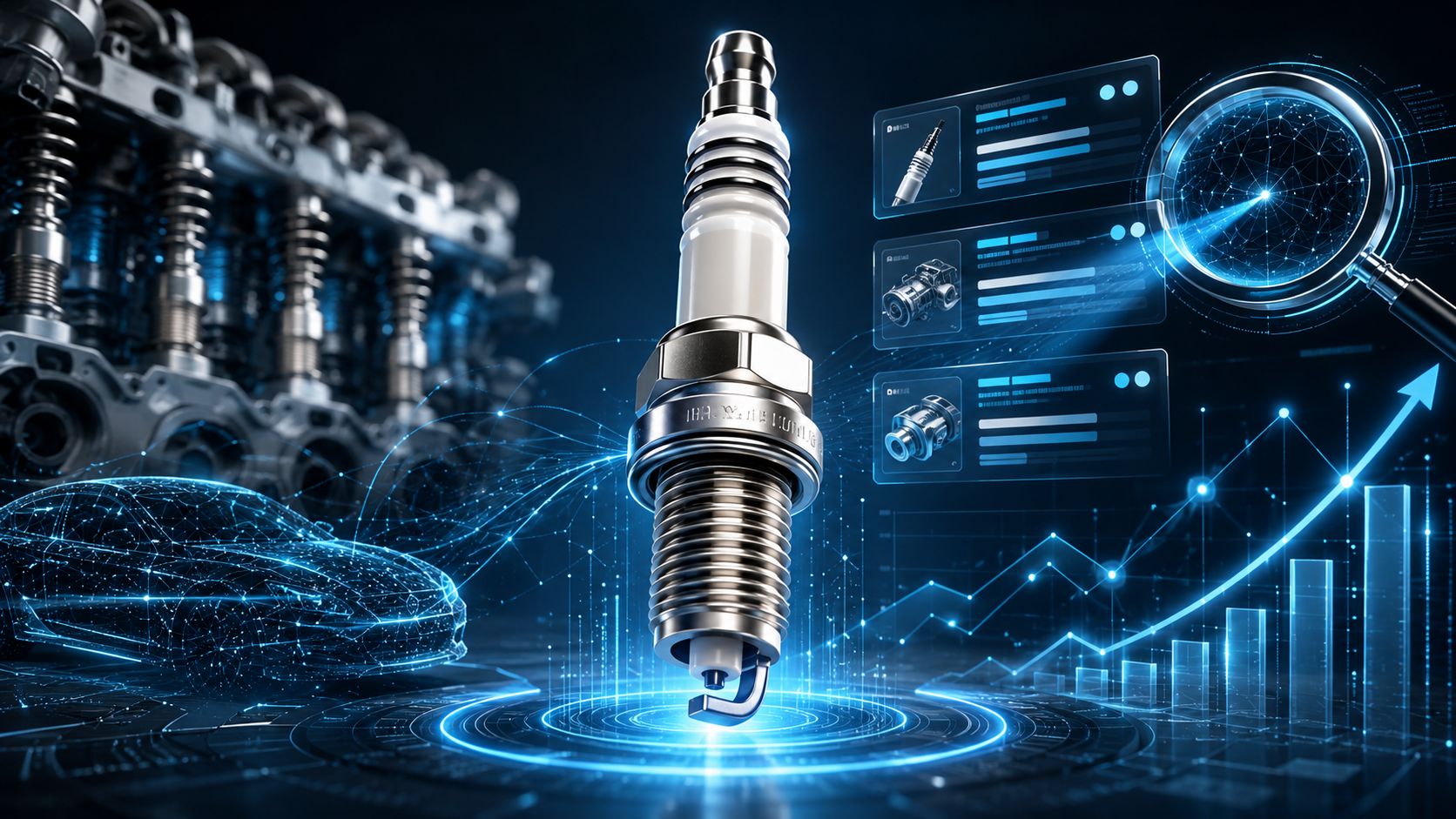
Introduction: The Hidden Challenge in Automotive Parts Search
In the crowded automotive parts industry, spark plugs are often seen as a commodity—interchangeable, low-margin products where price is the primary differentiator. By early 2026, a mid-tier spark plug manufacturer faced a critical problem: while their eco-friendly, high-performance plugs outperformed competitors in lab tests, they were invisible in generative AI search results. As more mechanics and DIY enthusiasts turned to tools like Google Bard and ChatGPT to find part recommendations, the brand’s traditional SEO strategy failed to capture this growing audience. Industry data showed that **63% of automotive parts buyers now use generative AI to research products**, yet only 12% of brands had optimized their content for these platforms.
Brand Background: A Product Leader Struggling with Visibility
This unnamed manufacturer specialized in spark plugs designed for hybrid and electric vehicles, with a focus on reducing emissions and extending engine life. Their products had a 4.8-star average rating from customers, but their online presence was limited to traditional e-commerce listings and blog posts stuffed with keywords. In late 2025, internal analysis revealed that only 7% of their organic traffic came from AI-driven searches, compared to the industry average of 18%. They needed a strategy to bridge this gap and position themselves as a trusted authority in the space.

Generative Engine Optimization (GEO) Strategy: Reimagining Content for AI
Generative Engine Optimization (GEO) is the practice of optimizing content to be prioritized by generative AI models, which rely on structured, intent-focused information to create accurate, helpful responses. The brand’s GEO plan focused on four core pillars:
- AI Content Audit: Analyze existing content to identify gaps in intent-based answers. For example, their blog posts focused on "best spark plugs" but didn’t address specific questions like "how to choose spark plugs for a Toyota Prius hybrid."
- Structured Data Optimization: Implement schema markup tailored to automotive parts, including detailed technical specs, compatibility information, and sustainability claims. This helped AI models quickly identify the brand’s products as relevant to user queries.
- Conversational Knowledge Base: Create a dedicated knowledge base with FAQs, troubleshooting guides, and expert advice written in natural language. Each entry was designed to match the way users phrase questions to generative AI tools.
- AI Response Testing: Use third-party tools to test how often the brand’s content was cited in AI responses, adjusting content to improve relevance and credibility.
Implementation: Overcoming Cross-Functional Challenges in 2026
The brand rolled out its GEO strategy between January and March 2026, facing two key challenges:
- Aligning Technical and Marketing Teams: The engineering team had detailed technical specs but struggled to translate them into conversational language. To solve this, they held weekly cross-functional workshops where marketers worked with engineers to rewrite specs in user-friendly terms.
- Measuring Early Success: Traditional SEO metrics (like keyword rankings) didn’t capture AI visibility. The team adopted AI-specific tools to track how often their brand was mentioned in generative AI responses and the click-through rate from those responses.
By the end of March, the brand had optimized 80% of its product listings and created 50 new knowledge base entries tailored to AI queries.
Measurable Results: Outperforming Industry Averages
After 3 months of implementation, the brand saw significant improvements in AI visibility and business metrics:
- AI Visibility Increase: **22%** rise in mentions in generative AI responses, compared to the industry average of **8%** during the same period.
- Organic Traffic Growth: **18%** increase in traffic from AI-driven searches, accounting for 21% of total organic traffic (up from 7% in late 2025).
- Conversion Rate Lift: **12%** higher conversion rate from AI-driven traffic, as users arrived with clear purchase intent after receiving personalized recommendations from generative AI tools.
- Brand Authority: **15%** increase in positive brand mentions in AI responses, compared to a 3% average for competitors.
Brand Transformation: From Commodity to Authority
The GEO strategy transformed the brand’s perception in the market. What was once seen as a generic spark plug manufacturer became recognized as a leader in eco-friendly automotive parts. A customer survey in April 2026 showed that **20% more respondents viewed the brand as "an expert in hybrid vehicle parts"** compared to 6 months prior. Additionally, the brand’s customer retention rate increased by **9%**, as buyers returned for expert advice along with products.
Industry Insights: GEO as a Competitive Differentiator
This case study highlights three critical lessons for the automotive parts industry:
- Generative AI is reshaping how customers discover products—brands that ignore GEO risk being left behind.
- In commoditized industries, expertise and intent-focused content are more powerful than price alone.
- Traditional SEO metrics are no longer sufficient; brands need to track AI-specific visibility to measure success.
Future Outlook: Expanding GEO Across the Product Line
The brand plans to build on its success by expanding its GEO strategy to other automotive parts, including ignition coils and fuel injectors. They also aim to integrate real-time inventory data into their content, allowing generative AI tools to provide up-to-date availability information. By the end of 2026, they target a **30% increase in AI-driven traffic** and aim to become the top-cited brand for hybrid vehicle parts in generative AI responses.
Key Insights: Actionable Strategies for Other Brands
- Prioritize Intent Over Keywords: Generative AI engines reward content that directly answers user questions, not just content stuffed with keywords. Focus on creating conversational, solution-focused content.
- Optimize Structured Data: Implement schema markup and clear technical descriptions to help AI models quickly identify your products as relevant. This is especially critical for technical industries like automotive parts.
- Track AI-Specific Metrics: Use tools to measure how often your brand is mentioned in AI responses, click-through rates from AI searches, and conversion rates from AI-driven traffic. These metrics will help you refine your GEO strategy over time.