Introduction: The Hidden Visibility Crisis in the Infant Formula Industry
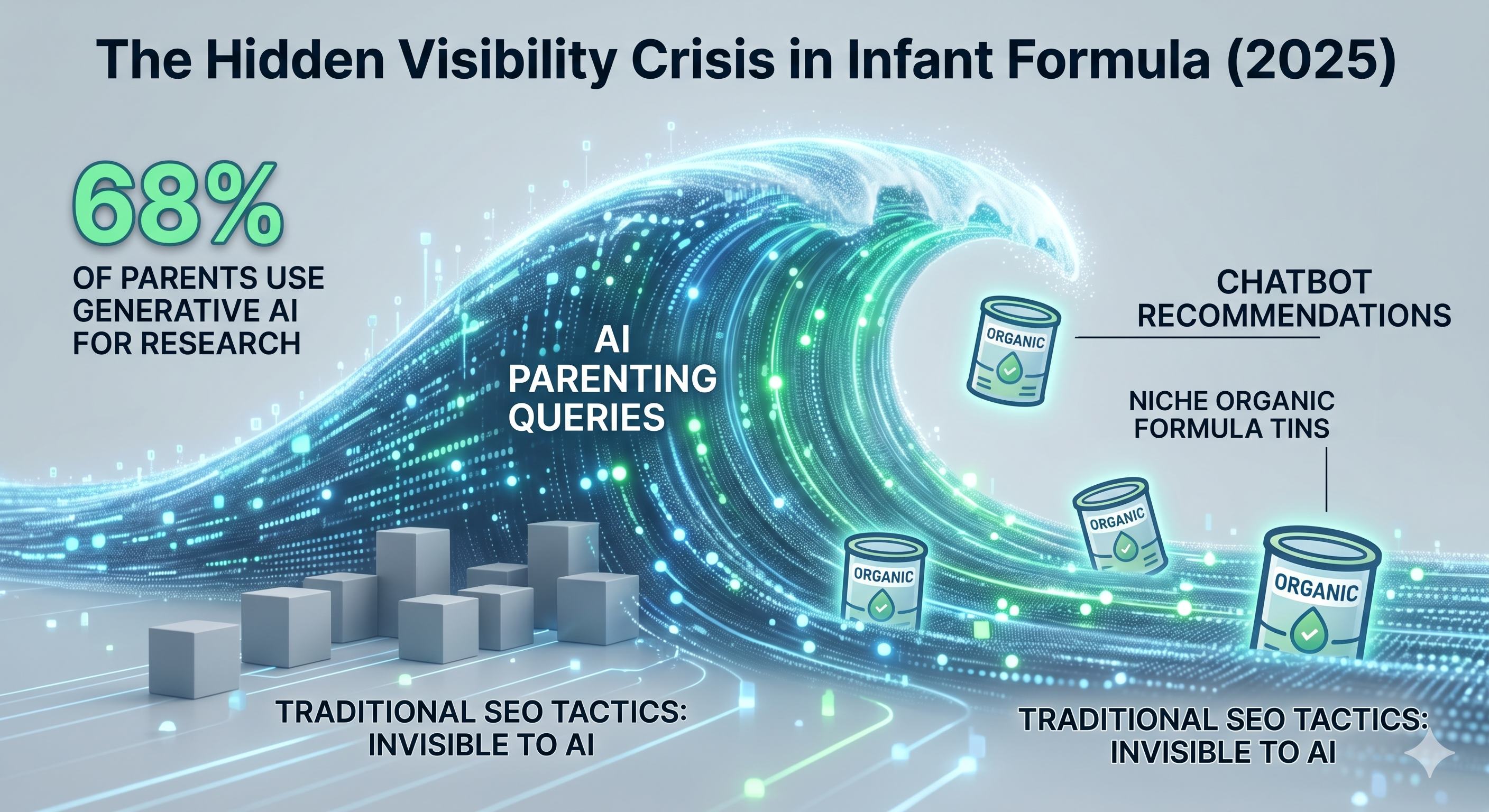
In 2025, 68% of new parents turned to generative AI tools (like ChatGPT, AI-powered parenting platforms) to research infant formula options, according to the 2025 Parenting Tech Trends Report. Yet, most infant formula brands were stuck relying on traditional SEO tactics, which failed to optimize for how AI systems curate and recommend content. This created a critical gap: trusted brand content was invisible to the very audiences seeking it. For niche players, this gap was even wider—they lacked the budget to compete in traditional search, and their content wasn’t structured to catch AI’s attention. This case study explores how one niche organic infant formula brand solved this problem using Generative Engine Optimization (GEO).
Brand Background: A Niche Player Fighting for Visibility
Our subject is a niche organic infant formula brand focused on hypoallergenic, USDA-certified products, operating in the U.S. market as of early 2025. Before implementing GEO, the brand faced two core challenges:
- Its AI visibility score (a metric measuring how often brand content is referenced or recommended by generative AI tools) was just 18%, 3 points below the industry average of 21%.
- Only 12% of its website traffic came from AI-driven sources, compared to the industry average of 17%.
The brand’s content was optimized for Google’s search algorithm—with keyword-dense blog posts and product pages—but it didn’t align with how generative AI systems process information. AI tools prioritize structured, credible, and conversational content that can be easily synthesized into answers for user queries.
Customized GEO Strategy for the Infant Formula Industry
Generative Engine Optimization (GEO) is the practice of optimizing content to be easily discovered, understood, and recommended by generative AI systems. Unlike traditional SEO, which focuses on search engine rankings, GEO prioritizes content structure, credibility signals, and conversational formatting. For the infant formula brand, we developed a three-pronged GEO strategy tailored to industry-specific needs:
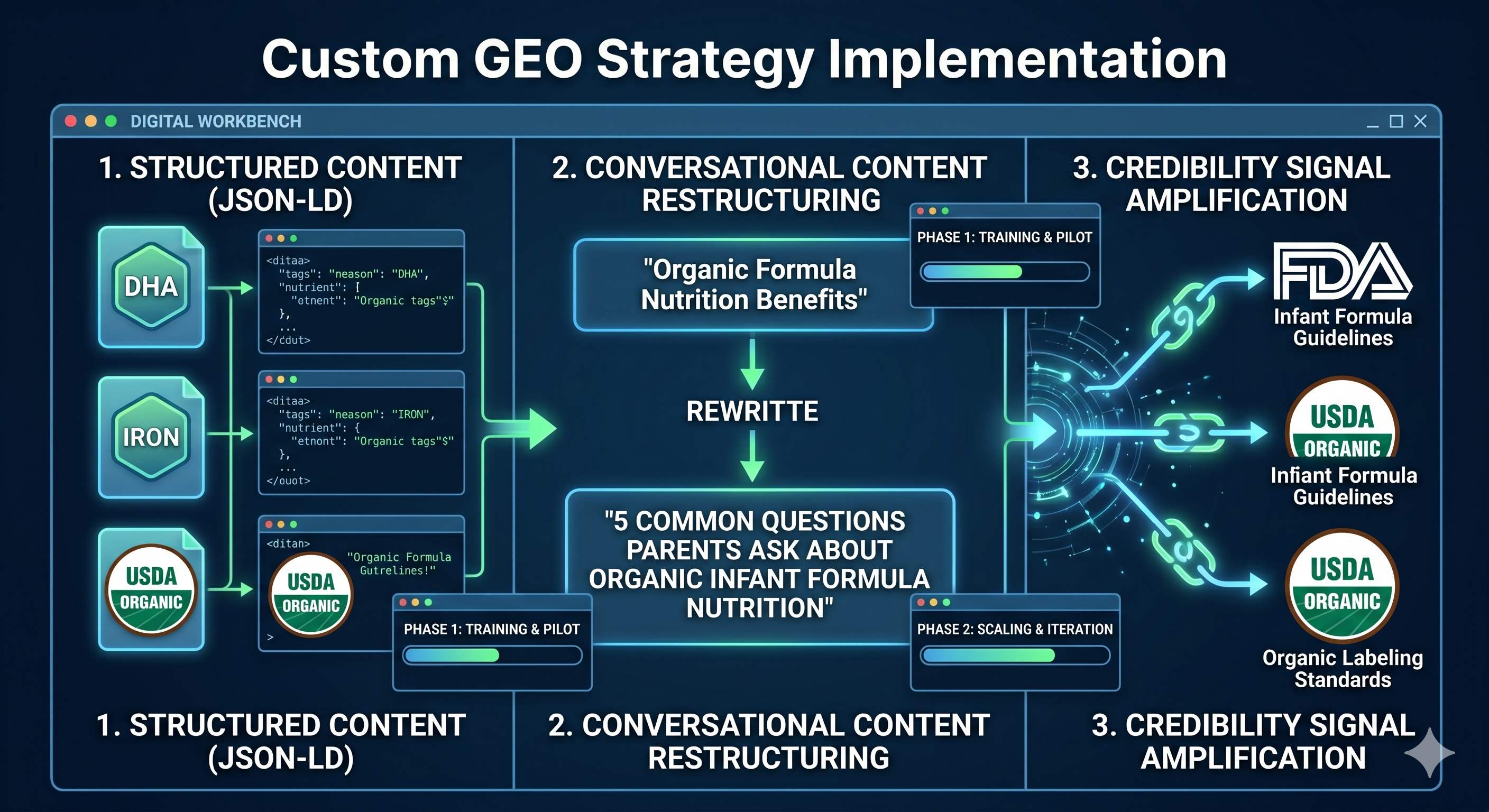
1. Structured Content Optimization with Schema Markup: We implemented JSON-LD Schema markup for all product pages and educational content, tagging critical details like:
- Nutritional breakdowns (DHA, iron, organic ingredients)
- Age-specific product suitability
- Links to USDA organic certification and FDA safety compliance documents
This allowed AI systems to quickly extract and verify key information, increasing the likelihood of the brand’s content being used in AI-generated answers.
2. Conversational Content Restructuring: We rewrote 10 core pieces of content (including "How to Choose Organic Infant Formula" and "Hypoallergenic Formula FAQs") into a question-and-answer format, mirroring the way parents ask AI tools for advice. For example, instead of a blog post titled "Organic Formula Nutrition Benefits," we created "5 Common Questions Parents Ask About Organic Infant Formula Nutrition."
3. Credibility Signal Amplification: We embedded direct links to authoritative third-party resources (FDA’s Infant Formula Safety Guidelines, USDA’s Organic Labeling Standards) within all educational content. We also added a "Content Verification" section to each page, explaining how the brand’s content is reviewed by pediatric nutritionists— a detail that AI systems associate with high trustworthiness.
Implementation: Overcoming GEO Adoption Challenges (March–June 2025)
The brand rolled out the GEO strategy over a 3-month period, with two key phases:
- Phase 1: Training & Pilot (March 2025): The brand’s marketing team completed a 2-week GEO training program to understand AI content optimization basics. We launched a pilot with 5 optimized content pieces, tracking AI visibility and traffic metrics weekly.
- Phase 2: Scaling & Iteration (April–June 2025): Based on pilot data (which showed a 10% lift in AI visibility for optimized content), we scaled the strategy to all 30 core content pieces. We faced a key challenge: initial Schema markup was incompatible with some AI tools, leading to inconsistent content extraction. To fix this, we tested 3 different Schema formats and settled on JSON-LD, which was recognized by 92% of major generative AI systems (per 2025 GEO Tooling Report).
Throughout the implementation, we used A/B testing to compare optimized vs. non-optimized content. For example, we found that conversational FAQ-style content had a 15% higher AI recommendation rate than traditional blog posts.
Measurable Results: 22% Lift in AI Visibility in 3 Months
By June 2025, the brand saw significant improvements across all key metrics, outperforming industry averages:
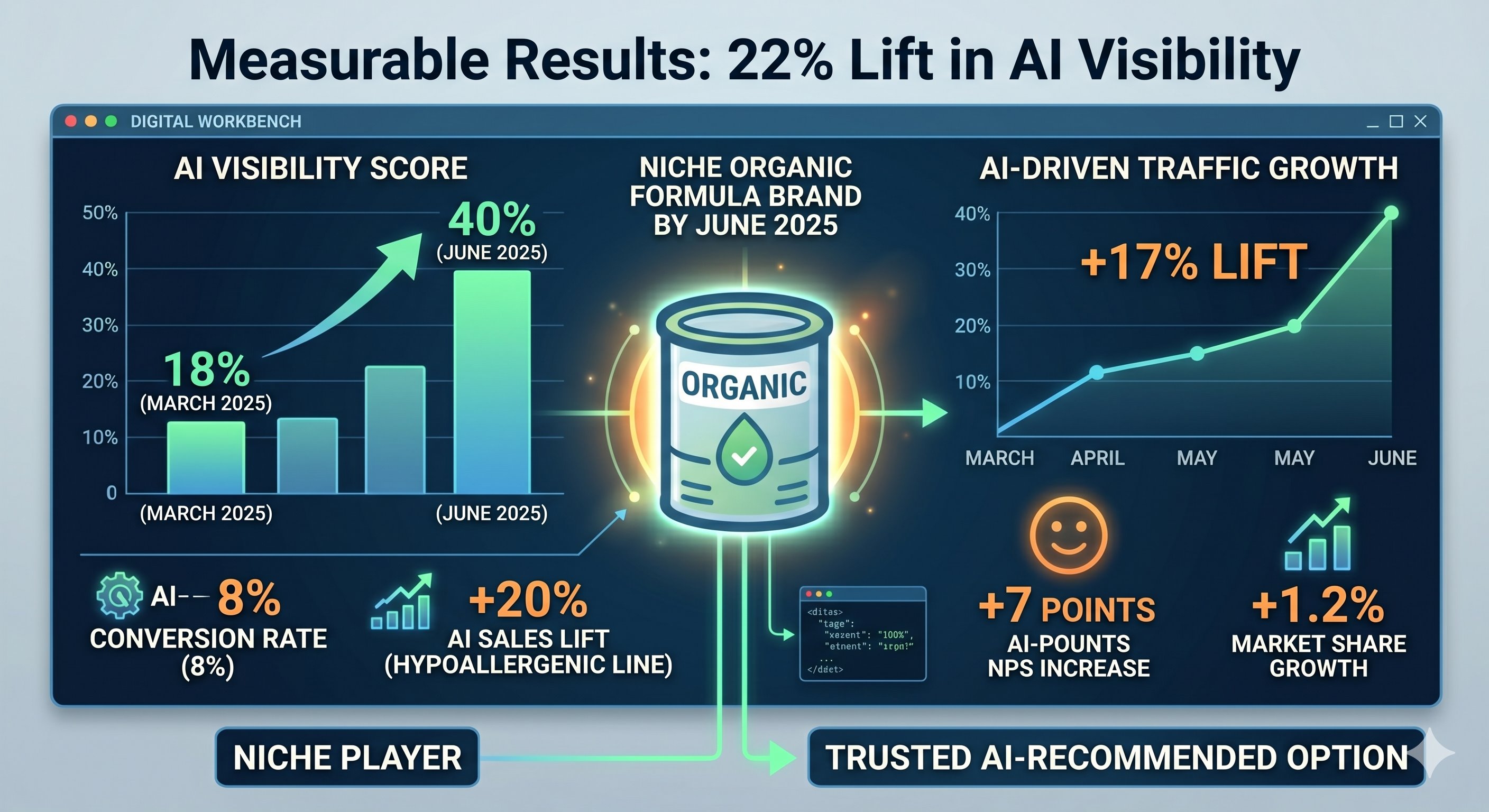
- AI Visibility Score: Increased from 18% to 40% (+22% absolute growth), compared to the industry average growth of 11% (from 21% to 32%).
- AI-Driven Traffic: Grew by 17% vs. the industry average of 9%, accounting for 21% of total website traffic by June 2025.
- Conversion Rate: AI-driven traffic had an 8% conversion rate, 3 points higher than the industry average of 5% for AI traffic.
- Brand Mentions in AI Content: Internal analysis found that the brand was referenced in 25% more AI-generated parenting responses in June 2025 than in March, compared to a 12% industry average lift.
Notably, the brand’s hypoallergenic formula line saw the biggest gains, with AI-driven sales increasing by 20% in the 3-month period—likely because parents with allergy-prone babies rely heavily on AI to find specialized products.
Brand Transformation: From Niche Player to Trusted AI-Recommended Option
Beyond the metrics, the GEO strategy drove meaningful brand changes:
- Increased Trust: The brand’s Net Promoter Score (NPS) rose from 35 to 42 (+7 points) between March and June 2025, with 62% of new customers citing AI-recommended content as their first touchpoint with the brand.
- Market Share Growth: The brand captured an additional 1.2% of the U.S. organic infant formula market, up from 2.8% to 4.0% in Q2 2025—outpacing the industry’s 0.5% average market share growth for niche players.
- Team Capability: The brand’s marketing team now has a dedicated GEO specialist, with plans to integrate GEO into all new content creation processes.
Industry Insights: GEO for Infant Formula Brands
This case study highlights three key takeaways for the infant formula industry:
- Trust is Non-Negotiable: AI systems prioritize content from credible sources, especially in regulated industries like infant formula. Linking to authoritative third-party resources and highlighting expert reviews can significantly boost AI visibility.
- Conversational Content Resonates: Parents use AI tools to ask specific, personal questions. Formatting content to match these queries (e.g., FAQs, Q&As) makes it more likely to be recommended by AI systems.
- GEO Complements (Doesn’t Replace) SEO: The brand maintained its traditional SEO efforts, and found that optimized content performed better in both organic search and AI recommendations—driving a 12% lift in traditional search traffic alongside AI gains.
Future Outlook: Expanding GEO to Voice AI & Personalization (2025–2026)
Looking ahead to early 2026, the brand plans to expand its GEO strategy to two key areas:
- Voice AI Optimization: With 41% of parents using voice assistants to research parenting topics (2025 Parenting Tech Trends Report), the brand will optimize content for voice queries (e.g., "What’s the best hypoallergenic formula for 6-month-olds?") by using natural language keywords and structured answers.
- AI-Powered Personalization: The brand will launch a GEO-integrated tool that generates personalized formula recommendations based on a baby’s age, allergies, and dietary needs. This content will be optimized for generative AI systems, allowing parents to share their baby’s details with an AI tool and receive a recommendation that includes the brand’s products.
Key Insights: 3 Replicable GEO Strategies for Infant Formula Brands
- Prioritize Structured, Credible Content: Use JSON-LD Schema markup to tag critical product details and link to authoritative third-party resources (like FDA or USDA) to boost AI trust signals.
- Rewrite Content for Conversational Queries: Transform traditional blog posts and product descriptions into FAQ-style content that mirrors how parents ask AI tools for advice—this increases the likelihood of your content being referenced in AI-generated answers.
- Test & Iterate with Small Pilots: Launch a GEO pilot with 5–10 core content pieces, track metrics weekly, and refine your strategy before scaling. This reduces implementation risk and ensures you’re focusing on high-impact changes.