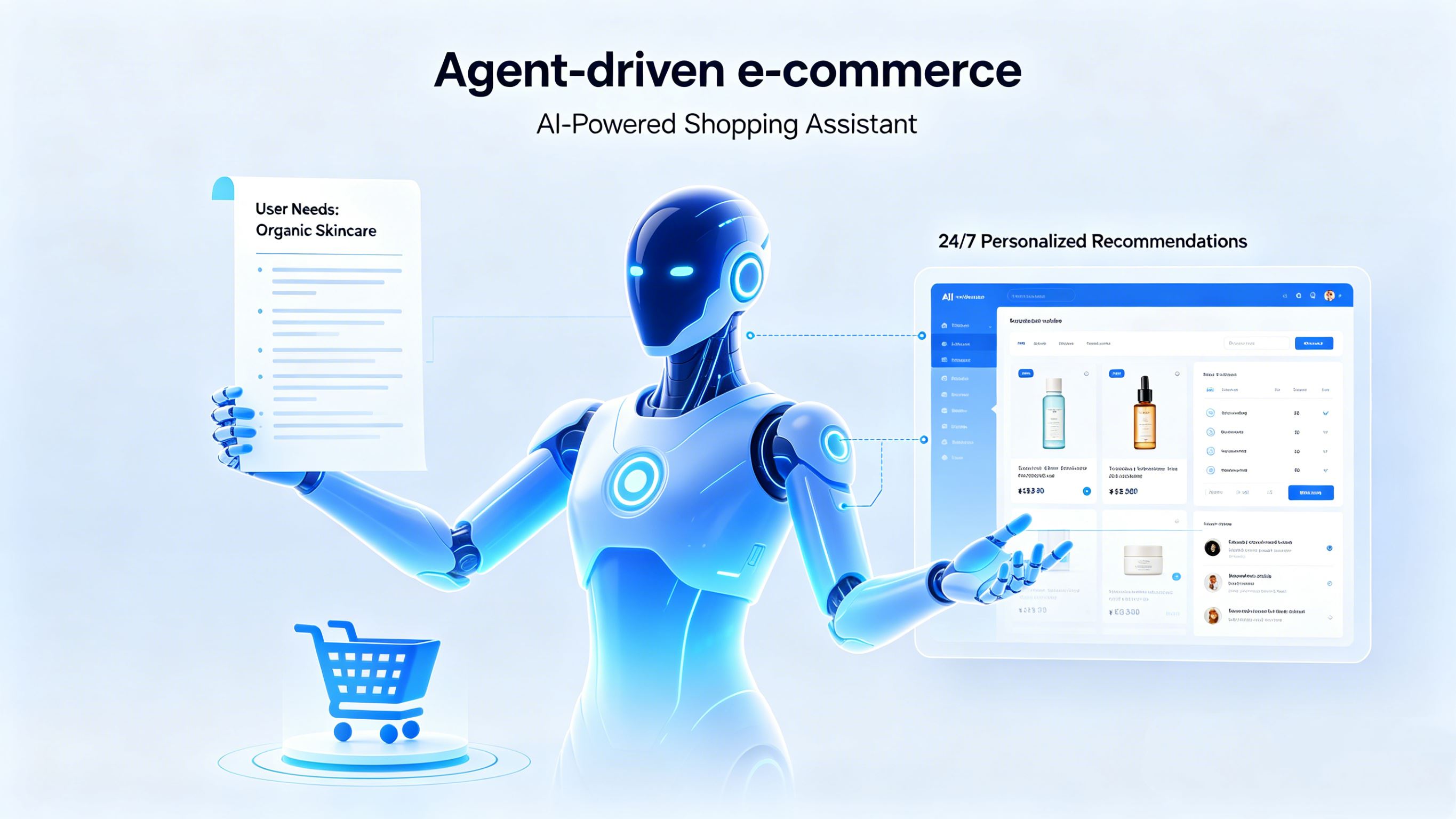
With the rapid development of generative AI technology, we’re experiencing the next wave of business model transformation—agent-driven e-commerce. AI is no longer just an information retrieval or auxiliary creation tool; it has gradually become an intermediary for users’ actual “purchase decisions and actions.” From early product recommendations to completing transactions directly within a conversational interface today, AI’s role continues to expand. The Agentic Commerce Protocol (ACP), released by OpenAI in the second half of 2025, is a milestone in this trend. It equips AI systems with secure, standardized, and collaborative commercial capabilities to work with merchants, unlocking unlimited potential for the future of AI e-commerce and GEO.
What is ACP?
Agentic Commerce Protocol (ACP) is an open commercial protocol standard co-developed by OpenAI and payment company Stripe. Its purpose is to establish a set of standardized processes between AI agents, users, and merchants, enabling AI to understand product information, manage shopping carts, trigger checkout, and finalize transactions—all without users leaving the conversational interface.
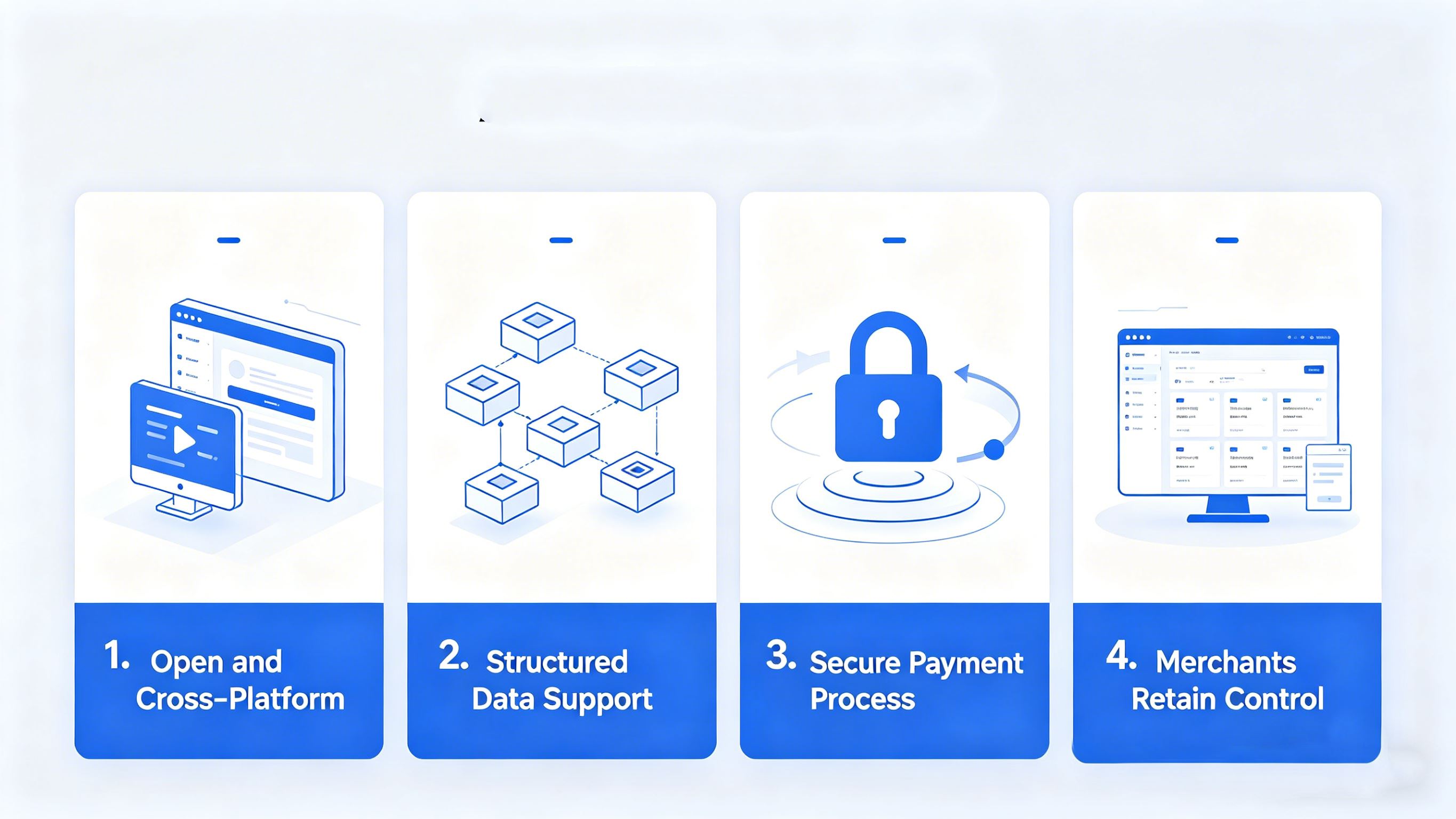
- Open and Cross-Platform: ACP isn’t tied to specific AI products or a single entry point, enabling a seamless purchasing experience across multiple AI interfaces.
- Structured Data Support: Merchants must provide unified, structured product information and inventory status to facilitate agent understanding and matching.
- Secure Payment Process: Through one-time, time-sensitive Delegated Payment tokens, it protects users' payment information and integrates with merchants' existing payment systems.
- Merchants Retain Control: Order processing, settlement, fulfillment, and refunds are still managed by merchants, with no transfer of control due to the protocol.
In short, ACP gives AI the ability to “know what to buy” and “how to buy,” while putting purchasing power directly in the hands of users and merchants—not confining it to a single platform.
Practical Application of ACP: ChatGPT Instant Checkout
The most notable real-world application of ACP is the “Instant Checkout” feature in ChatGPT. This tool lets users complete product purchases right within the ChatGPT conversation interface—no need to navigate to web pages, open apps, or go through tedious confirmation steps. It creates an almost seamless journey from identifying a need to making a payment.
For example: When a user asks to buy a product in ChatGPT, the AI doesn’t just recommend products—it also shows prices and inventory. After the user confirms, it provides an embedded checkout button; a single click completes the order. The ACP protocol underpins this entire process, letting agents communicate directly with merchant systems and trigger transactions via secure payment tokens and structured APIs.
Currently, this capability is available to ChatGPT Free, Plus, and Pro users in the U.S. market. Users can buy directly from Etsy sellers in chats, and over one million Shopify merchants—including Glossier, SKIMS, Spanx, and Vuori—will launch the feature soon.
ACP Deployment Process
The core steps to deploy ACP can be broken down as follows:
- Prepare a Product Feed: Merchants must structure product details—such as SKUs, titles, descriptions, prices, inventory, and images—and make them accessible to agents via open API endpoints, in line with the protocol.
- Integrate Agentic Checkout Endpoint: Create an API that supports agent-triggered and embedded checkout experiences, ensuring users can complete transactions within the AI interface.
- Configure Delegated Payment: Merchants need to partner with payment processors (like Stripe or PayPal) to support temporary, secure payment authorization tokens. This lets agents authorize transactions on the user’s behalf without exposing sensitive payment details.
- Security and Compliance Considerations: When designing the process, it is essential to take into account risk control (such as fraud detection), compliance requirements (such as PCI/DSS), return and refund processes, and user privacy protection mechanisms.
- Development and Testing: Test product crawling, inventory synchronization, order submission, and payment processes repeatedly in a sandbox environment. This ensures no freezes, overselling, or failed orders in real-world use.
Key Notes:
- Ensure product feed accuracy and real-time updates—otherwise, AI recommendations may be inaccurate.
- Payment authorizations must be short-lived and restricted to avoid security risks.
- Synchronize order lifecycle data with your original system promptly to avoid inventory discrepancies.
These processes and principles are universally valuable for any merchant looking to expand user purchasing paths in future AI commerce scenarios.
The Difference Between ACP and UCP
In the AI-driven commerce ecosystem, ACP isn’t the only protocol. Google’s Universal Commerce Protocol (UCP) is another open standard, designed to establish a broader universal transaction language between AI agents, payment providers, and merchants. While both relate to AI shopping, their core focuses differ:
| Dimension | ACP | UCP |
| Target Scenario | Conversational AI shopping and embedded checkout (e.g., ChatGPT Instant Checkout) | More universal, cross-border AI shopping and checkout, integrated across search, AI models, and multiple interfaces |
| Core Functions | Product discovery, embedded checkout, delegated payment processes | Standardized and clear language for products, inventory, checkout, orders, and payment processes |
| Ecosystem Positioning | Primarily centered around certain AI entry points (e.g., ChatGPT) | Intends to cover more platforms and agents (including the Google ecosystem) |
| Control Logic | Emphasizes agent-guided purchasing, while allowing merchants to control settlement and fulfillment | Emphasizes cross-platform consistency and ecosystem diversity |
Essentially, ACP is more of a protocol standard for “completing a single transaction” between agents and merchants today, while UCP aims to establish a broader, more unified language for the AI shopping ecosystem. The two aren’t mutually exclusive—they complement each other, addressing e-commerce pain points at different levels.
What Should GEO Do Next?
As protocols like ACP and UCP gradually enter practical use, the meaning of GEO (Generative Engine Optimization) is constantly evolving:
- Structured Data Preparation Is No Longer Optional—It’s Fundamental: For any protocol, accurate, standardized product feeds are the foundation for agents to identify, recommend, and even process checkouts. Ensure product data includes comprehensive semantic tags—such as use cases, target audiences, and specific attributes (color, size, material)—not just basic titles and prices.
- AI Visibility Matters More Than SEO: In the future, products need to be visible not just in search results, but also “understood” in AI recommendation pipelines. That means product descriptions, attributes, and inventory information must follow AI-parsable semantic formats.
- Multi-Protocol Compatibility Strategy: Merchants should consider supporting both ACP and UCP to cover order sources from different AI entry points, avoiding lock-in to a single ecosystem.
- Redesigning the User Experience: AI shopping isn’t just adding a button—it’s designing a complete journey from conversational touchpoint and recommendation matching to purchase confirmation and payment. User privacy and security design are just as critical.
- Real-Time Data and Intelligent Feedback Mechanisms: As AI agents become more capable of real-time decision-making, merchants need to offer real-time inventory updates, price adjustments, and dynamic recommendation capabilities to boost conversion rates.
In short, the future of GEO isn’t just traditional SEO/Feed optimization—it’s a new paradigm of “AI Shopping Experience Optimization + Multi-Protocol Compatibility Strategy.”
Conclusion
OpenAI’s ACP isn’t just a protocol technical specification—it’s a passport to the era of AI commerce. It unlocks new possibilities for agent-driven shopping experiences while setting new requirements for merchants, developers, and optimizers. Understanding and leveraging ACP, along with future cross-protocol strategies, will be key to seizing the next wave of AI transaction dividends.