
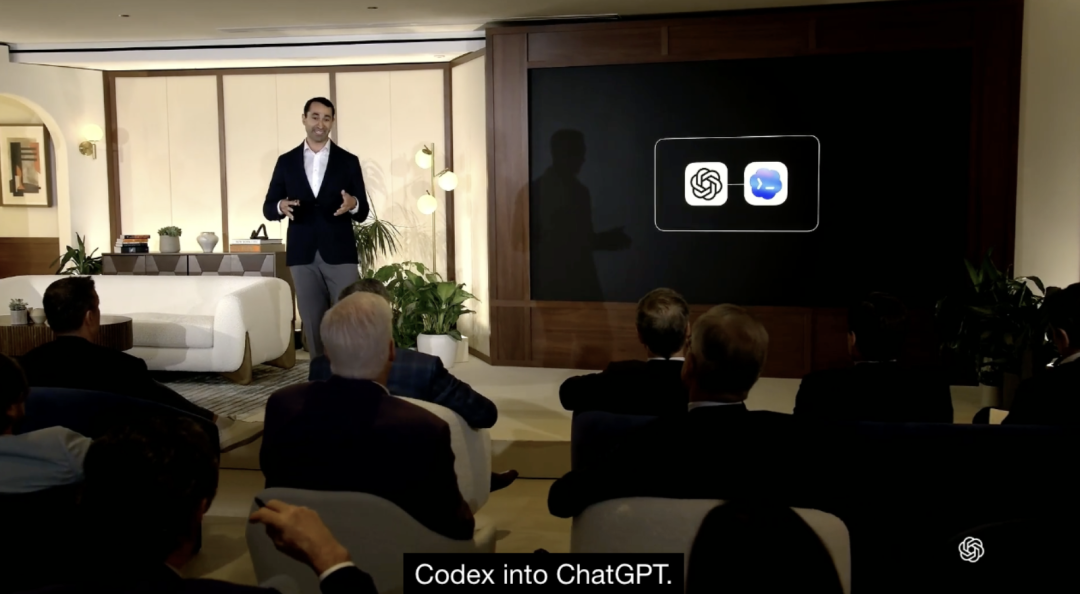
AI is no longer just a consumer curiosity—it’s becoming the backbone of modern work, and OpenAI just made a bold move to solidify its position in the enterprise space. During its recent Intelligence at Work live event, the company announced plans to merge ChatGPT with its Codex platform, alongside three game-changing updates designed to cater directly to business teams.
The ChatGPT-Codex Integration: Redefining AI Workflows
Over the next few weeks, ChatGPT will serve as the conversational front-end for Codex’s powerful task-execution capabilities. This integration means users can leverage ChatGPT’s natural language interface to issue commands, while Codex handles the heavy lifting of executing complex tasks. The news didn’t come out of nowhere: earlier, the head of the Codex team teased a rebranding on X, hinting at a major shift in the platform’s direction.
User Growth Signals Demand Beyond Developers
The push into enterprise isn’t arbitrary—it’s driven by explosive user growth. Codex now boasts over 5 million weekly active users, a six-fold increase since its desktop launch in February. What’s even more telling is the shift in user demographics: knowledge workers are joining the platform three times faster than developers, now making up roughly 20% of the user base. This trend clearly shows that AI tools are needed across all corners of knowledge work, not just coding.
Three Game-Changing Updates for Enterprise Teams
- Role-Specific Plugins: Six tailored plugins cover critical enterprise functions: data analysis, creative production, sales, product design, equity research, and investment banking. Each plugin comes with built-in integrations, role-specific guidance, and customizable context. For example, the data analysis plugin lets users connect to data sources, run SQL queries, generate charts, and build interactive reports all via natural language. The creative plugin transforms briefs into mood boards, iterates product photography, produces ad copy, and exports directly to tools like Canva.
- Sites Functionality: Turn ideas, analyses, and project plans into fully hosted interactive websites—including dashboards, planners, and collaborative review workspaces. Teams can share unique URLs within a single workspace, track real-time progress, update content dynamically, and collaborate seamlessly across departments.
- Annotations Feature: Boost instruction precision by allowing users to highlight specific sections of documents, spreadsheets, or slides for targeted edits. This feature enhances context processing efficiency, making it ideal for tasks like modifying font styles, citing sources for key claims, or adjusting chart labels without rewriting entire sections.
OpenAI’s Aggressive Enterprise Push
This integration and the new updates are part of a larger strategy to penetrate the enterprise market. Just three weeks ago, OpenAI launched the OpenAI Deployment Company, a joint venture focused on embedding AI tools deep into enterprise infrastructure and business processes. The venture secured over $40 billion in funding, underscoring the company’s commitment to becoming a core part of enterprise operations.
The Fierce AI Enterprise Competition
OpenAI isn’t alone in chasing enterprise clients. Anthropic, a key competitor, launched its enterprise AI Agent program in February and rolled out a finance-focused Agent product in May. While Anthropic has prioritized enterprise clients from the start with vertical-specific solutions, OpenAI has traditionally focused on consumer users—only adding plugin support to Codex in March. This merge marks OpenAI’s attempt to catch up, leveraging ChatGPT’s massive user base to transition business users to its enterprise tools. As the race heats up, the winner will be the company that can seamlessly integrate AI into the daily workflows of businesses, rather than offering standalone tools.
The merger of ChatGPT and Codex is more than just a product update—it’s a turning point for AI in the workplace. As companies compete to deliver tools that don’t just assist but become integral to how work gets done, enterprise teams can expect more tailored, powerful AI solutions that adapt to their unique needs.